 FinancialTime professional site for small businesses
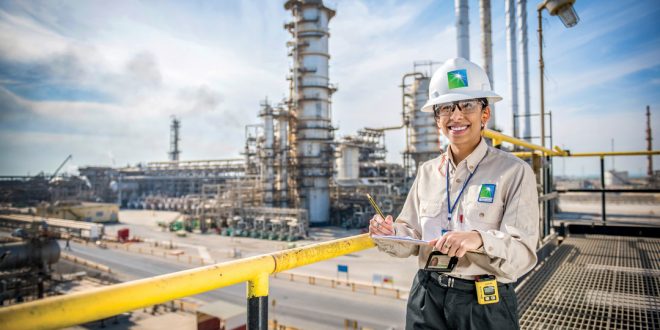
Saudi Aramco, the oil company of the Saudi Arabian kingdom, is the world’s most lucrative company in an excellent year. Nevertheless, this is not a great year for oil. We now know that in the second quarter of 2020, the company’s earnings was $6.6 billion, which appears fine provided the bad proving of the oil market amidst the coronavirus concerns, however it is a sign of the imposing problem the Saudi federal government has ended up being on the company. The second-quarter numbers highlight that Aramco itself is a great company that remains in a fantastic position with great assets, but that the current iteration of the Saudi federal government resembles a weight around the company’s neck.
Saudi Monarchy Control
In times past, the Saudi government permitted the business an excellent deal of autonomy. That autonomy included the capability for the company to manage its own finances when earnings came in, which was in stark contrast to most other national oil companies that were less effective. In addition, between 1995 and last year, the government oil ministry was run by previous heads of Aramco, so the country’s oil policy was not disruptive to the business’s goals. Nevertheless, recently, under the current king, Salman, and his child Mohammed, the company controls little beyond its own financial resources.
SABIC Acquisition
In Q2, Aramco completed the documents for a purchase of 70% of SABIC, a regional petrochemical company. Aramco purchased the business from the nation’s sovereign wealth fund under orders of the Saudi federal government (seemingly the crown prince, Mohammed) as a way to instill money into the sovereign wealth fund. Significantly, Yasir Rumayyan, the head of the Saudi sovereign wealth fund, has been also the chairman of Aramco given that last year. That was a role that had generally been held by the oil minister and previous Aramco CEO. Now, it is held by a male without any oil experience but a really close relationship with the king’s son. In the end, Aramco will pay top dollar for a petrochemical business that provides numerous redundancies with Aramco’s own operations. Additionally, SABIC’s worth has already dropped given that the settlements– it ought to be bought for less. But Aramco needs to do what the monarchy says.
Maximum Petroleum Production
Likewise in Q2, Aramco was required to produce oil at its optimum capacity and offer it inexpensive, which triggered worldwide prices to drop. Aramco long promoted an optimal continual capacity (MSC) of 12 million barrels production of oil each day but had never reached that limit in real production. It selected to keep some spare capacity in case of an emergency and as a strategic benefit. However, in early March, the Saudi oil ministry– which is now headed by another of the king’s children, Abdulaziz– was distressed that Russia declined an OPEC proposal to cut production. As a result, the oil ministry decided unilaterally to increase production to capability (an average of 12 mmbpd) in April and concurrently decrease the price it credited Asian clients. On April 2, Aramco set a record with 12.1 million barrels produced. The oil ministry’s choice, more than anything, triggered the abrupt and severe drop in oil costs in early March. It triggered the rate of Brent to drop 30% in a matter of hours on March 9 before trading even started in the United States. It set the phase for the low prices of the second quarter. Yes, demand collapsed, but oil rates fell on Saudi Arabia’s choice before anyone understood what would take place to require.
That early March decision by the Saudi oil ministry– ostensibly a decision by the monarchy– caused low costs which injure Aramco along with all of its rivals. It also required Aramco to overproduce, perhaps injuring its oil fields. As a result of the overproduction, Aramco was likewise tasked with an increasing capability to 13 million bpd, a hard ask that would need a commitment of resources. (Ultimately, Aramco dropped its production in Might, however, on its August 10 incomes call Aramco validated that it still has a goal of 13 mmbpd MSC in the future). In other words, when the Saudi oil ministry, under control of the monarchy, reacted impetuously in early March, it both plunged oil costs hurting earnings and hurt Aramco operations. Aramco had no say.
Quarterly Profit
Aramco did have earnings of $6.6 billion in the quarter, below the already low variety of $16.6 billion in the prior quarter. In the entire very first half of 2019, net income was $46.9 billion. Compared to rivals, however, Aramco did well. For circumstances, ExxonMobilXOM +2.5% and Chevron CVX +3.4% both saw losses in the second quarter. Aramco has the most affordable expense of production since the oil it pumps is quickly accessible, it has constructed an effective system and it has the sole concession contract for the kingdom. Aramco is a well-run company and has many advantages.
Dividend Guarantees
Yet, the company will be paying out all of that $6.6 billion-plus another $12.15 in dividends for the quarter. This is since the federal government (through the company) guaranteed a $75 billion dividend before the December IPO, and the federal government can not afford to break that guarantee. When the business went public, 20% of all Saudi people– guys, females, and kids– bought in. Numerous business and rich individuals were forced to buy in by government salesmen, and it’s safe to state that “no” was not an anticipated response. Part of the promise of purchasing into Aramco was the big dividend. It would be something to distress an investor, but a king can not pay for to enrage his population. Moreover, if the dividend was reduced, the stock price would drop, making the king and his son look even worse in front of the population. For that reason, Aramco is charged with administering cash it did not make last quarter to please the political requirements of a monarchy.
Aramco has some terrific things going all out– quickly accessed oil, efficient operations and strong management. These attributes, paired with a federal government that stayed out of the way, were what resulted in its increase in success and production between 1988 and 2014. Now, it has a government that is unpredictable and progressively eager to interfere. Aramco’s Q2 revenues are a mark of unpredictability, and it appears like there is more to come.


