FinancialTime professional site for small businesses
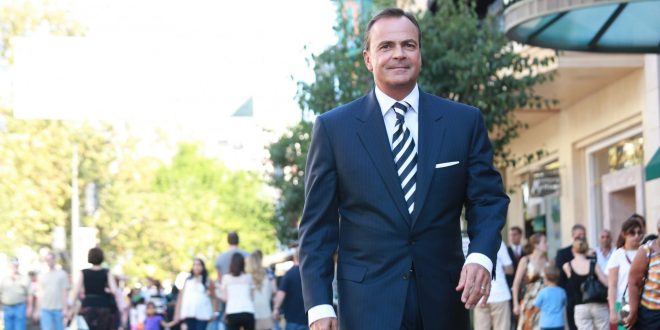
In mid-March, property billionaire Rick Caruso and his team performed war video games to see how the coronavirus may impact his collection of ultra-luxury shopping centers in southern California.
“The worst-case circumstance was it going through the year into the first quarter of next year,” says Caruso, 61, in a phone interview from his estate in Brentwood. At the time, that doomsday circumstance seemed a remote possibility. Then the infection became worse. And even worse still.
Prior to the end of the month, Caruso’s more than 2 dozen residential or commercial properties, including The Americana in Glendale, Palisades Town and The Commons at Calabasas, stood quiet. His most important holding, The Grove, in Central L.A., was also eerily still: The iconic outside shopping center typically bustles with some 20 million visitors each year, more than the Great Wall of China, producing approximately $2,460 in sales per square foot, the second-highest in the nation.
“Our business over the last 29 years has grown at a 19% intensified annual development rate,” states Caruso. All of a sudden, “our income went from roughly 100% to 25%.”
Caruso assisted much of the small companies on his residential or commercial properties to stay afloat through rent deferrals and abatements, and the company expanded outdoor patio space free of charge.
Not remarkably, thanks to a reopening of California and a prevalence of data revealing that the virus is less most likely to be transmitted outside, his outdoor destinations are flourishing once again: Net operating earnings are now at 85% of pre-COVID levels, with tenancy rates holding at 97%. Lots of restaurants, he states, are creating sales equal to or greater than pre-COVID levels. Things are equally appealing at his exclusive Montecito resort, Miramar, where he just recently upped the cost of a private beach club subscription by 30%, to $125,000.
The turn-around has the outspoken billionaire a lot more pushed about his central organization thesis: that outdoor areas will prove far more important a proposal than the beleaguered indoor shopping malls that were once his primary competition.
” [This] will, I believe in many ways, modification customer patterns and human behavioral patterns,” he states. “I just don’t believe people are going to aspire to go into recirculated air.”
So far, the counterargument is difficult to mount, particularly in California, where indoor shopping centers stay closed, part of a national trend that has caused expectations that merchants will supposedly close 25,000 stores, many of them in shopping malls. Even the New Jersey megamall, American Dream, a 3-million-square-foot monument to consumer costs, closed in March just six months after it first opened.
Overall, nationwide retail sales fell 8.1% in the second quarter, as compared to the very same duration in 2019, according to CBRE.
“Entering Into COVID, I believe [shopping malls] were quite on the brink,” says Tom Lagos, of Institutional Residential Or Commercial Property Advisors. “Coming out, I believe, it’s going to be a sort of cleansing.” Still, Lagos says Caruso isn’t out of the woods yet. Values have fallen anywhere from 5% to 15%, even for outdoor homes, he estimates. Meanwhile, with the pandemic resuming its spread, worries may lead governments to shutter even fresh-air shopping or drive shoppers back into hiding.
“We were on a trajectory,” Caruso says, dismissing the concerns. “COVID has been a great accelerator.”